Youtube Gallery
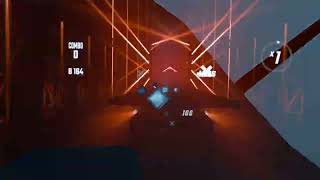
#BEATSABER #METALICA #INSANE #SPEED 200% #EXPERT #PLUS #Lanzandon #goatofbeatsaber #fastest #2
# The Metronome in the Nursery: On Purity, Time, and the Unseen War for Beat Saber's Soul page 1z of 2z **Introduction: The Factory Reset as Holy Ground** In the beginning, there was the cube. A glowing, geometric object hurtling through virtual space, synchronized to a pulse of music. The stated goal was simple: slice it with your saber in the indicated direction. The hidden truth, the one that would ignite a years-long, subterranean war for the soul of an entire game, was that this simplicity was a veil. It concealed a fundamental choice between two incompatible realities: one of **infinite, customizable experience** and one of **absolute, verifiable truth**. This essay charts that war through the testimony of a singular, uncompromising voice—a self-proclaimed “4D player” and “metronome”—who did not merely participate in *Beat Saber* but ascended from its machinery to diagnose its mortal sickness. Their argument, distilled to its essence, is that the game’s community, in its pursuit of fun, creativity, and inclusivity, systematically annihilated the very possibility of legitimate achievement, creating a world of “cheaterboards” where the only honest skill is one that exists in defiant, invisible isolation. **Part I: The Original Sin – Sideloading and the Collapse of the Frame** The fracture point is not a style of play or a difficult song, but a technical act: **sideloading**. The community at large sees this as a necessary tool, the key to a vibrant ecosystem of custom songs, visual enhancements, and quality-of-life fixes. Our protagonist sees it as the Original Sin, the moment the seal was broken. From this perspective, sideloading is not a tool but a declaration of independence from the game’s sanctioned state. It introduces an ungovernable variable. Once the game’s files can be altered, the foundational premise of a uniform competitive field evaporates. This is not a philosophical quibble but a practical annihilation of fairness. If the visible saber (a cosmetic .obj file) can be lengthened or reskinned, and the invisible hitbox (a physics parameter) can be independently enlarged, then **visual evidence becomes meaningless**. A player appearing to perform a miraculous feat may be a skilled artist or a fraud using an invisible crutch; there is no way for an observer to tell. Thus, any public leaderboard—whether the official global list or the community-run “verified” systems—is built on a foundation of sand. They are, in the protagonist's unforgiving terminology, **“cheaterboards.”** The community’s sophisticated anti-cheat replay systems are seen not as a solution, but as a damning admission of guilt: a sprawling, bureaucratic police force trying to manage the chaos unleashed by the initial decision to break the law. The purity of the challenge, they argue, can only exist on a **factory-reset device**, where the game’s state is known, uniform, and inviolable. Any deviation is, by definition, cheating. **Part II: The False Metric and the Cult of the Outcome** Within this corrupted framework, a second-order decay took hold: the worship of the **false metric**. *Beat Saber*’s scoring system rewards specific, rigid wrist motions for maximum points. This created a perverse incentive. To climb the ranks, players optimized for this robotic, wide-angled swing, a movement often divorced from the rhythm and feel of the music itself. The game’s scoring, therefore, did not measure musicality or holistic skill, but a narrow form of mechanical efficiency. The “best” players became experts in a minigame of angle calculation, not masters of rhythm. This false metric then bred a corrosive culture focused solely on the **outcome**—the green “FULL COMBO” text, the high number—rather than the **process**. For the masses, the goal shifted from engaging with the challenge to simply making the notes disappear. This, the protagonist argues, is the mentality of an infant: banging on a pan to hear noise, satisfied by the collision itself. Tools like the `No Fail` modifier, intended for practice, were used not to safely engage with difficulty, but to avoid the emotional consequence of failure, inflating scores and severing the vital link between effort and result. When these players eventually faced the true, unassisted challenge and saw their scores drop, they interpreted this **necessary regression**—the valley one must cross to reach a higher peak of skill—as a catastrophe, and retreated to their safety nets. They chose, in essence, the lie of a high score over the truth of a lower one.
Published At: 01/26/2026 11:01:55